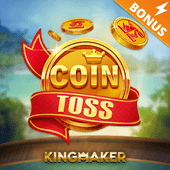
Coin Toss | Coin Toss KingOH Guide
Coin Toss is the simplest call in the cards hall: you choose heads or tails, the coin flips once, and a correct call pays the current row. The honest short answer is that no call pattern improves the odds, so the only real work is stake discipline. Practice the rhythm in the Coin Toss Demo, then bring a fixed flip budget to the live coin through the official kingoh Coin Toss entry.
Coin Toss neighbours in the cards hall
These companions share the same short-round rhythm. Tap an icon to take the standard entry route, and read each title's own rules before spending.

How a Coin Toss round works from call to payout
The shape: every round has four beats, and none of them hides anything from you.
Beat one, the stake. Choose the flip amount first; it multiplies every payout row equally, so deciding it before the coin appears is the whole discipline.
Beat two, the call. Tap heads or tails. There is no third option and no way to hedge a single flip.
Beat three, the flip. The coin resolves in seconds. Streaks feel meaningful while they happen and mean nothing afterwards, which is the most useful thing a beginner can internalise.
Beat four, the row. A correct call pays instantly; a miss ends the round. Because one flip is a fair-fifty event in most kingoh Coin Toss tables, the long-run picture is fixed, and the only variable you control is how many flips your budget buys. Reaction games like Tower share the same single-decision DNA, which is why players who like the coin usually like the climb.
Milestones that make Coin Toss sessions measurable
Why milestones: a coin has no levels, so the achievements worth keeping are the ones you define. Four markers turn a random evening into a reviewable record.
Marker one, the read. You can recite the payout rows for both calls without scrolling back.
Marker two, the demo lap. Twenty Coin Toss Demo flips logged with call, result and balance. The log is the achievement, not the streak.
Marker three, the boundary. One full session ended exactly at the preset flip count, win or lose, without a single extension.
Marker four, the cross-check. You compared the coin's silence with a feature-driven cabinet such as Sweet Bonanza, where the game stages the excitement, and you chose your format on purpose. The 1000-spin variant listed on Sweet Bonanza 1000 raises the same stakes higher, which some nights is exactly the point.
The Coin Toss session in five steps
The page, compressed: five steps carry a first visit from curiosity to a clean exit.
Step 1. Read both payout rows on the kingoh Coin Toss screen before the first call.
Step 2. Run twenty flips in the Coin Toss Demo and note how streaks feel in the balance, not in memory.
Step 3. Set a flip count and a stop time in the phone clock; both boundaries close the session equally.
Step 4. Play the plan with one flat stake and skip any doubling urge after a miss.
Step 5. Leave at the line, log one sentence about how the streaks felt, and let that sentence be next visit's advice.
Coin Toss requirements before your first flip
Everything necessary, in one list: Coin Toss asks for less equipment than any cabinet on the site, but the conditions it does ask for are strict.
Condition one, a funded account. Your KingOH balance covers the planned flip count, and losing all of it changes nothing in your week.
Condition two, a verified access route. Reach the lobby through the official domain or the app installed from it. If you need the cabinet on your home screen, the standard kingoh download flow from that domain keeps the coin identical between visits, and the wider kingoh slots shelf travels with the same account.
Condition three, a rehearsed rhythm. Twenty Coin Toss Demo flips behind you, so the call button needs no thought.
Condition four, a written boundary. Stake, flip count, stop time: three numbers on one line, decided before the first call and untouched after it.